
Waste to energy in Australia: is it a genuine climate solution?
The waste to energy Australia debate starts at your kitchen bin. A banana skin, a soft-plastic wrapper and a broken glass jar need different treatment. Turning some rubbish into electricity can reduce landfill use. But it doesn't automatically cut emissions, and it shouldn't displace recycling.
For you as an investor, the useful question is: what happens to this particular waste without the project? This guide explains the technologies, Australian policies and project finances, then gives you a practical way to assess climate claims.
Bloom Impact Investing is an Australian climate impact investing company and education community. Its former fund selected holdings against climate-solution research from Project Drawdown and ClimateWorks Australia. Bloom stopped promoting and distributing that fund in June 2023 and began winding it up; it continues its sustainable investment mission through education. That history makes the distinction between a waste-management business and measurable impact investing relevant here. A technology label can't settle the question.
This article reflects information available by 14 June 2026. It's general information only, not personal financial advice.
Waste to energy Australia: match the process to the waste
A mixed rubbish truck and a dairy's wastewater tanker carry very different raw materials. Comparing their energy projects by megawatts alone misses the first decision: which treatment fits the waste?
Thermal treatment uses heat. In a moving-grate incinerator, waste burns, heats a boiler and produces steam that drives a turbine. Mixed residual rubbish can supply the fuel. Metals may be recovered afterwards, but ash remains. Gasification and pyrolysis use different oxygen conditions to produce gases or other products; experience with conventional incineration doesn't prove those processes will handle an identical waste mix.
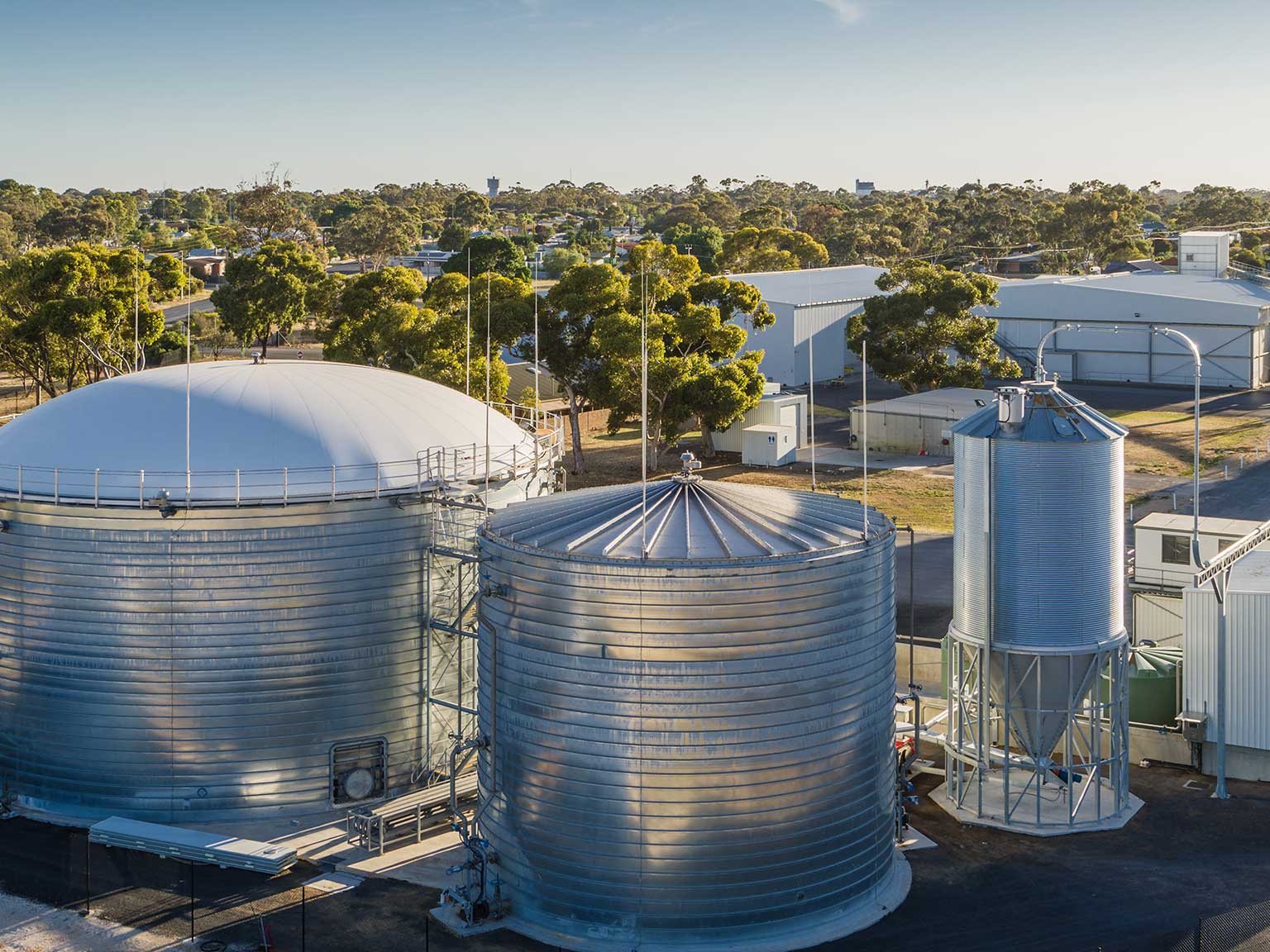
Anaerobic digestion uses microorganisms in an oxygen-free vessel to break down organic material, such as food waste or manure. The resulting biogas can supply heat or electricity. Removing carbon dioxide and other impurities produces biomethane, which can substitute for natural gas. Digestate, the remaining material, needs testing and an approved destination before it can provide soil benefits.
Landfill gas recovery collects methane from waste already buried, then burns it in an engine or flare. Electricity generation recovers energy; flaring destroys methane without generating electricity. Neither replaces separate collection of new food waste.
Your first filter is the feedstock, meaning the material entering the plant. For bioenergy in Australia, contaminated food scraps, wastewater and clean agricultural residues shouldn't share a single assessment. The IEA's 2025 biogas report explains how feedstock choices affect emissions and project development.
Kwinana and East Rockingham: capacity isn't proven performance
A project headline can sound like an operating result. “Enough power for homes” may describe a design forecast, while commissioning tests are still running. Australia's Western Australian thermal projects show why dates matter.
ARENA's Kwinana project record, updated in April 2025, describes capacity to process 460,000 tonnes of residual waste annually and export 38 MW. Those are capacity figures, not verified annual throughput or electricity output. In WA Parliament's November 2025 answer, the government said Kwinana was receiving and incinerating waste during environmental commissioning, while East Rockingham remained under construction.
ARENA's 2019 East Rockingham announcement specified planned throughput of 300,000 tonnes annually and 29 MW. The ACCC's July 2025 statement recorded administration and receivership, and anticipated operation no earlier than mid-to-late 2026. That was a forecast, not a completion guarantee.
You can separate approved capacity, commissioning and demonstrated operation in your notes. Actual tonnes treated, net electricity exported and compliance results carry more weight than an opening ceremony. Mature technology can still sit inside a financially troubled project.
The waste hierarchy limits what should reach the furnace
Say a council introduces a food organics and garden organics collection service, usually called FOGO. Its red-bin waste shrinks. If a thermal plant's business plan assumes that food waste will keep arriving, successful council policy creates a commercial problem.
The waste hierarchy gives priority to avoiding waste, then reuse and recycling, ahead of energy recovery and disposal. Energy recovery belongs after feasible material recovery. Landfill diversion alone can hide the loss of recyclable material.
DCCEEW's September 2025 organics guidance reports that the 2024 National Waste Policy Action Plan aims to halve organic waste sent to landfill by 2030. That makes future residual-bin composition a more useful input than today's total rubbish volume. You can test a forecast against planned organics collection and better recycling, rather than treating all waste as available fuel.
State rules also affect where a project can operate and what it can accept:
- Western Australia: the Waste Authority's 2020 position supports recovering energy only from residual waste. A credible supply estimate starts after recoverable materials have been removed.
- New South Wales: the EPA's 2021 infrastructure plan identified four priority areas: West Lithgow, Parkes, Richmond Valley and Southern Goulburn Mulwaree. It also provided an exception for specified on-site industrial fuel substitution. Biological processes such as digestion fall outside that thermal framework.
- Victoria: the Victorian Government's July 2025 policy page sets a thermal scheme cap of 2.5 million tonnes annually. A scheme licence doesn't replace planning permission or environmental approvals.
For your assessment, waste rights and planning rights are separate. A contract doesn't make unsuitable feedstock acceptable, and a policy supporting energy recovery doesn't guarantee approval. That distinction also matters when comparing recycling and waste-management businesses.
Does it reduce emissions? Compare the same waste and energy services
Imagine two loads: food scraps that would rot in landfill, and fossil-derived plastic that would remain largely undecomposed there. Burning both diverts waste. Their climate consequences differ.
DCCEEW reported in 2025 that organic waste in Australian landfills generates about 13 million tonnes of carbon dioxide equivalent annually. Carbon dioxide equivalent, or CO2e, expresses different greenhouse gases on a common warming basis. Avoiding methane can provide a substantial benefit, but that national figure isn't a project's savings estimate.
The IPCC's 2006 inventory guidelines count carbon dioxide from burning fossil-derived waste, including plastics, in national emissions totals. They report biogenic carbon dioxide from materials such as food and wood separately. Separate reporting doesn't mean no carbon dioxide leaves the chimney.
A useful life-cycle assessment, or LCA, compares the project with a realistic alternative delivering the same waste-treatment and energy services. ARENA's October 2025 LCA guidelines require the alternative fate of waste in the reference scenario under their project approach. For food waste, that alternative might be composting or another digester, rather than uncontrolled landfill.
You can read the assessment through four questions:
- Does the landfill comparison include its actual methane capture and destruction?
- Does the project count transport, auxiliary fuel, methane leaks and residue treatment?
- Does the electricity comparison allow for a cleaner grid over the plant's life?
- Are claimed heat and material benefits supported by real users and approved uses?
Digestion isn't exempt. The IEA's 2025 assessment reports estimated methane leakage of 2%–5.5% for agricultural biogas plants internationally; that's not an Australian fleet measurement. Covered digestate storage and leak detection therefore deserve attention.
I would treat an LCA without a realistic alternative as insufficient evidence. You don't need to reject the technology; you need a better comparison. Bloom's guide to spotting greenwashing applies the same discipline to broad environmental claims.
Project economics: the gate fee can matter more than electricity
A power-station label can distract you from the waste-disposal contract. A gate fee is the payment a facility receives for accepting waste. Electricity sales add revenue, but debt and fixed operating costs can remain when waste deliveries fall.
For a waste to energy Australia business, separating disposal revenue from energy revenue makes the risk easier to understand. Consider a hypothetical plant; these are illustrative AUD assumptions, not market prices or a named project's results:
- 100,000 tonnes × AUD 160 gate fee = AUD 16 million.
- 100,000 tonnes × 0.5 MWh net electricity per tonne × AUD 80/MWh = AUD 4 million.
- Total annual revenue = AUD 20 million before operating costs, debt payments and tax.
If deliveries fall to 80,000 tonnes and electricity earns AUD 50/MWh, the same assumptions produce AUD 12.8 million in gate fees plus AUD 2 million in electricity sales: AUD 14.8 million. The revenue decline is 26%: (20 − 14.8) ÷ 20 × 100. Profit could fall faster because some costs don't fall with throughput. We haven't modelled costs here.
Long-term power purchase agreements can reduce electricity price exposure. Waste contracts can reduce volume uncertainty, but minimum-tonnage obligations may penalise councils for reducing rubbish. ARENA's 2019 East Rockingham announcement described a “waste-arising” structure, where councils paid for capacity used without penalties for successful waste reduction. You'd still need to examine the actual contract.
Landfill levies influence competing disposal prices; they aren't automatically revenue for the plant. Air-pollution controls, outages, ash disposal and construction delays all need funding. A commercial assessment also needs to distinguish bottom ash from air-pollution-control residues, rather than assuming every residue can be sold.
Carbon-credit income deserves a separate test. The Australian Government's November 2025 landfill-gas method announcement explains that credits depend on capture above applicable baselines. Electricity generation alone doesn't prove eligibility. Bloom's Australian carbon credits guide explains the distinction between energy revenue and credited abatement.
How can you judge a genuine climate solution?
Say a nurse in Geelong reads an investment update celebrating higher waste volumes. Is that growth good for the climate? The answer depends on what arrived and what would otherwise have happened to it.
You can keep two separate assessments: commercial viability and climate benefit. Strong cash flow doesn't prove avoided emissions. A favourable emissions model doesn't prove the business can service its debt.
For the climate assessment, useful evidence includes audited feedstock composition, a dated LCA and measured net energy output. For viability, it includes funded construction, contract terms, operating performance and cash available after maintenance. Both assessments should recognise contamination, pollution limits and residue destinations.
The revealing test is whether the business can survive successful waste policy. Can it remain viable with less residual rubbish, fewer plastics and lower electricity-displacement emissions? A company that discloses those sensitivities gives you more useful information than one reporting tonnes diverted alone. You can use this test alongside Bloom's climate impact investing guide.
Frequently asked questions about waste to energy Australia
Is waste to energy renewable energy?
Some output comes from renewable biological material, but mixed waste also contains fossil-derived plastics. You can't assume the entire electricity output is renewable. ARENA's 2019 East Rockingham announcement refers to renewable certificates for eligible feedstock under Clean Energy Regulator requirements. For a mixed-waste project, the useful check is how it measures eligible energy content and accounts for fossil carbon.
Is waste to energy better than landfill?
It can be, especially where it avoids methane from organic waste and displaces higher-emission energy. But the result depends on waste composition, landfill gas capture, plant emissions and feasible recycling or composting alternatives. You can compare the same waste-treatment service in a life-cycle assessment. Tonnes diverted from landfill don't establish the size, or even the direction, of a climate benefit.
What is the difference between anaerobic digestion and incineration?
Anaerobic digestion uses microorganisms without oxygen to process organic material and produce biogas. Incineration burns combustible waste and can use the heat to generate steam and electricity. Digestion leaves digestate; incineration leaves ash and pollution-control residues. You can assess suitability by the incoming waste: wet organic material and mixed residual rubbish don't require identical treatment or environmental controls.
Are Kwinana and East Rockingham operating?
WA Parliament reported in November 2025 that Kwinana was receiving and incinerating waste during environmental commissioning, while East Rockingham remained under construction. The ACCC's July 2025 assessment anticipated East Rockingham operation no earlier than mid-to-late 2026. These dated records don't establish full-year performance by June 2026. You'd need subsequent commissioning reports and regulatory records before treating capacity forecasts as demonstrated output.
Can waste-to-energy projects earn Australian carbon credits?
Some landfill-gas projects can earn Australian Carbon Credit Units under an applicable method. The 2025 landfill-gas method credits qualifying methane capture and destruction above baselines, with other requirements also applying. That doesn't make every incinerator or digester eligible. You can check the registered project, method, crediting period and verified issuance before counting credits as recurring revenue or evidence of impact.
A climate solution should survive less waste and cleaner power
A plant may look attractive while landfill methane and grid emissions are high. Its case needs to survive better alternatives. For waste to energy Australia projects, the most useful final comparison is a lower-waste future: more organics collected separately, less recyclable material burned and cleaner electricity displaced.
Your practical endpoint is evidence for that comparison, alongside a business model that can fund compliant operation. If the benefit disappears under plausible waste reduction, “energy recovery” remains a description of the process. It hasn't yet earned the climate-solution label.